Context
The issue
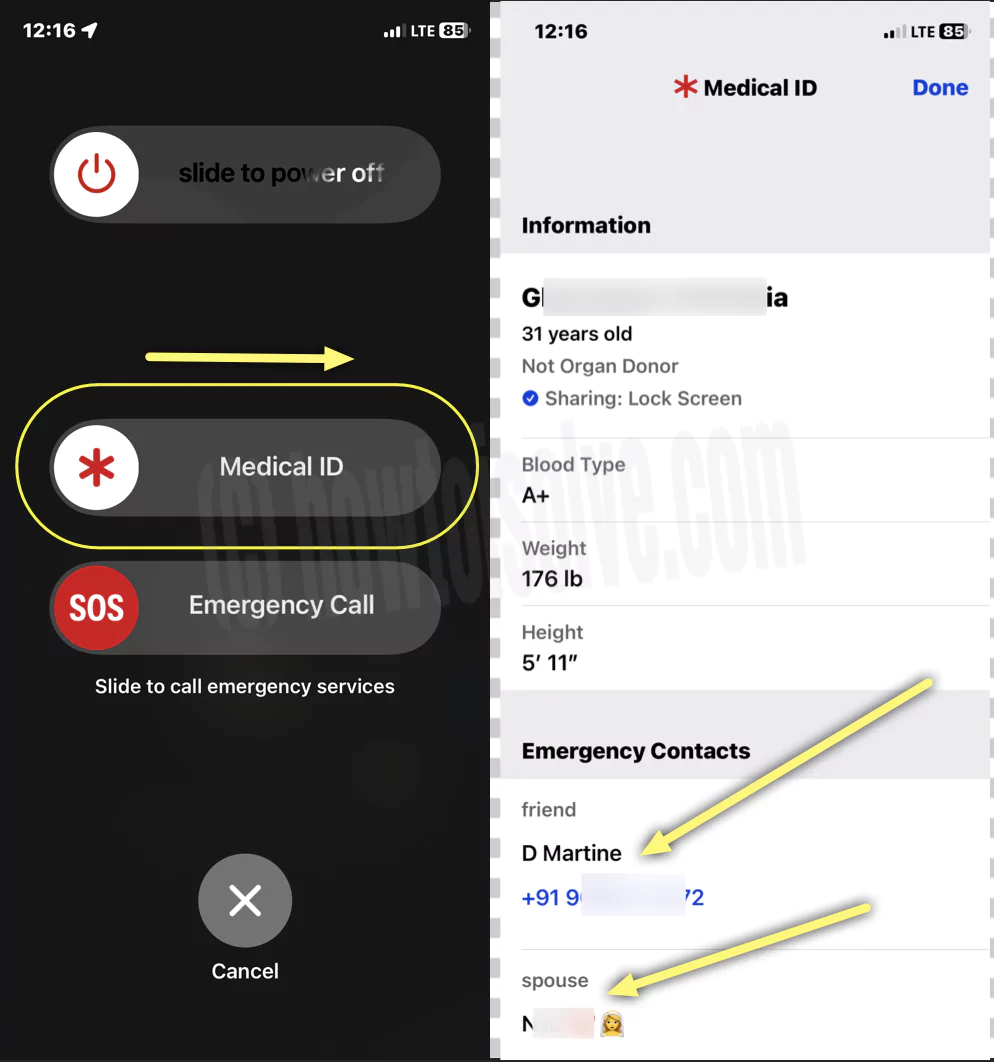
Inspired by watching my grandmother carry a heavy folder of medical papers to every appointment, unsure what a doctor would ask for. That inconvenience becomes dangerous in an emergency: paramedics and ER staff often have no information about an unidentified or unconscious patient, at the exact moment it matters most.
Approach
The idea
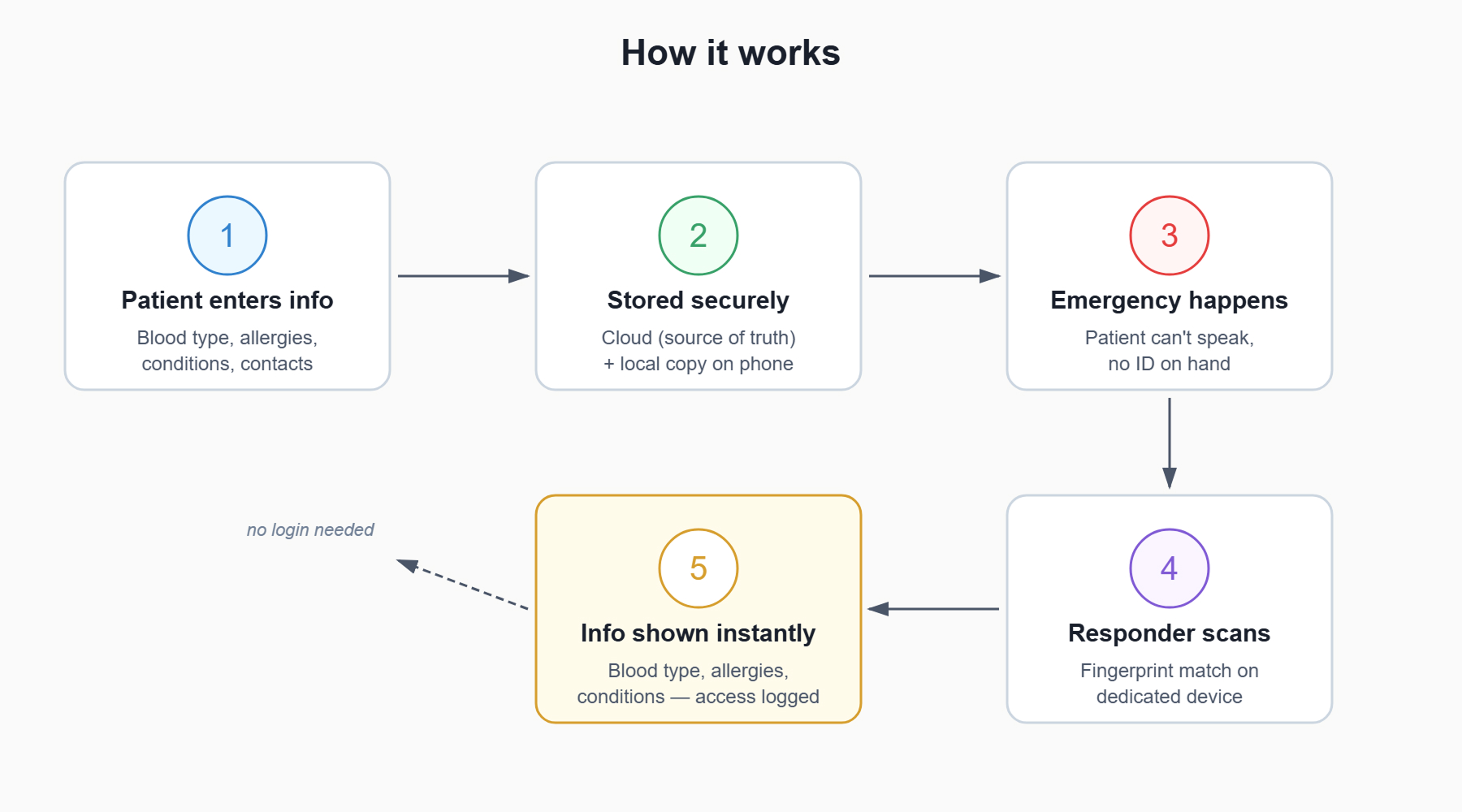
A fingerprint-based emergency card, deliberately scoped small: blood type, allergies, major conditions, and an emergency contact — not a full medical history. Data is self-entered by the patient (with an optional doctor-verified upgrade later), stored in the cloud and on-device, and made viewable by responders through a scan, with every access logged.
Outcomes
Why it's different
Rather than solving hospital-to-hospital data sharing (a bigger, institutional problem some governments are starting to address), this puts a small, critical piece of information directly in the patient's control — accessible with no login, in any country, with or without existing health infrastructure.